If you are drawn to Mill Valley for its trails, trees, and village feel, where you land matters more than many first-time buyers expect. In a city shaped by steep canyons, hillside roads, shoreline flats, and a remarkably deep pedestrian network, two homes that look close on a map can offer very different daily routines. This guide will help you compare Mill Valley’s trailside living options, understand how neighborhood patterns affect lifestyle, and narrow in on the kind of setting that fits you best. Let’s dive in.
What trailside living means in Mill Valley
In Mill Valley, trailside living is not just about being near a park. The city covers about 4.8 square miles, yet it offers roughly 110 acres of parks, open space, and recreation facilities and is bordered on three sides by major public lands, including Mount Tamalpais State Park, Muir Woods National Monument, and Golden Gate National Recreation Area.
That setting shapes daily life in a practical way. You may be able to step from a residential street onto a lane, stair path, or trail that connects to larger open-space systems without treating outdoor access as a special outing.
Mill Valley also has an unusually layered pedestrian network. The city guide documents more than 175 heritage steps, lanes, and paths, many of which connect to Marin County Open Space District land, Homestead Valley Land Trust land, and Marin Municipal Water District trails.
That said, not every route functions the same way. The city notes that many of these paths are steep, rocky, or not maintained by the City, so a home that appears highly walkable on paper may feel very different in day-to-day use.
Why terrain changes the experience
One of the biggest differences between Mill Valley neighborhoods is topography. Some areas center on flatter streets and easier circulation, while others trade convenience for privacy, views, or a stronger sense of retreat.
This matters because trailside living can mean different things depending on the setting. In one part of town, it may mean a quick walk to downtown, a park, and nearby paths. In another, it may mean redwood surroundings, quieter roads, and immediate access to hillside routes, but with more complex driving, parking, or walking conditions.
For many buyers, the real decision is not simply whether they want trail access. It is whether they want village walkability, wooded seclusion, broader views, or flatter daily movement.
Downtown and Old Mill options
If your priority is convenience, downtown-adjacent Mill Valley is often the first place to look. Residential areas around the commercial core include cottages, apartments, condominiums, and single-family homes, with a location pattern built around proximity to everyday destinations.
The city’s General Plan describes this central area as having a strong walk-to-everything character because of its closeness to churches, schools, parks, the Downtown Plaza, and commercial activity. Nearby public spaces include Old Mill Park, Downtown Plaza, Sycamore Park, and the Dog Park.
For a buyer who wants trails and town life in the same routine, this area can be compelling. You may give up some privacy or lot size compared with upper-slope neighborhoods, but you gain easier access to shops, parks, and the social rhythm of central Mill Valley.
Cascade and Blithedale Canyon living
Cascade Canyon and Blithedale Canyon offer a different side of Mill Valley. According to the city’s planning materials, both areas share narrow, winding roads, dense redwoods and broadleaf evergreens, and a sense of enclosure created by canyon walls.
These neighborhoods often appeal to buyers who want a more tucked-away feel. Housing styles are mixed, and density generally drops as you move from the canyon floor into steeper hillside areas.
The setting is a big part of the appeal. Homes here can feel deeply connected to the landscape, with a stronger sense of shade, topographic drama, and separation from the busier central streets.
At the same time, canyon living asks for a realistic look at access. Road width, slope, stairs, and the difference between map distance and actual ease of movement all matter more here than they might in flatter parts of town.
Miller, Molino, and upper-slope pockets
Miller/Molino and areas like Warner Canyon/Kite Hill often come into focus when you want more openness or broader views. The city describes Miller/Molino as having narrow hillside roads but generally less dense vegetation than the canyon areas, which can create a more open feel over central Mill Valley.
Warner Canyon/Kite Hill adds another variation. Lower sections are closer to more conventional neighborhood development, while ridgeline lots can become larger and more estate-like.
These pockets tend to highlight one of Mill Valley’s classic tradeoffs: privacy versus view, and retreat versus convenience. If you value dramatic siting and a stronger visual relationship to the hills or town below, these areas may stand out.
Sycamore, Tamalpais Park, and flatter neighborhoods
If you want a more conventional neighborhood pattern, Sycamore/Tamalpais Park deserves close attention. The city notes that this area is relatively level and has a more standard lot pattern than the canyon neighborhoods, with a variety of architectural styles and landscaping.
For many buyers, that translates into easier daily circulation and a simpler sense of orientation. You may still enjoy proximity to parks and central Mill Valley, but in a setting that feels less terrain-driven.
Other flatter neighborhoods, including Scott Valley, Alto, Enchanted Knolls, Bayfront, and Shelter Ridge, follow a more contemporary subdivision pattern. The city notes that Scott Valley includes larger-lot custom homes, while areas closer to the bayfront and Highway 101 include more multi-family development.
These neighborhoods can appeal if you want more straightforward access patterns than the steeper canyon and ridge areas. They also give you a useful contrast when weighing the romance of hillside living against the convenience of flatter streets.
Homestead Valley as a nearby option
For buyers focused on trail connection above all, Homestead Valley is an important adjacent option to consider. Its land trust manages more than 80 acres of open space and maintains a trail network that connects with Mount Tamalpais State Park, Golden Gate National Recreation Area, and Mill Valley’s own steps, lanes, and paths.
In practical terms, this makes Homestead Valley one of the most trail-integrated residential areas in the broader Mill Valley setting. The land trust also works with fire-safety groups on vegetation management, which reflects how closely open space and residential life intersect here.
If your idea of home includes frequent trail use as part of your normal week, this area may deserve a place on your shortlist alongside Mill Valley proper.
What home styles you may see
Mill Valley does not present a uniform housing stock. The city’s historic preservation materials say 176 properties were surveyed, with roughly 160 built before 1930, and the documented style range is broad.
You may encounter Vernacular, First Bay Tradition, Queen Anne, Italianate, Tudor, Craftsman, Colonial Revival, Spanish Colonial Revival, Classical Revival, Art Deco, and later Bay Area modernism. That variety is a major reason Mill Valley feels layered and distinct rather than visually repetitive.
Older homes often read as wood-frame, porch-oriented residences with gable or hip roofs. The city’s historic context materials note that many early examples show First Bay Tradition or Queen Anne influence, while vernacular examples can include simple cabins, modest bungalows, and gable-and-wing houses.
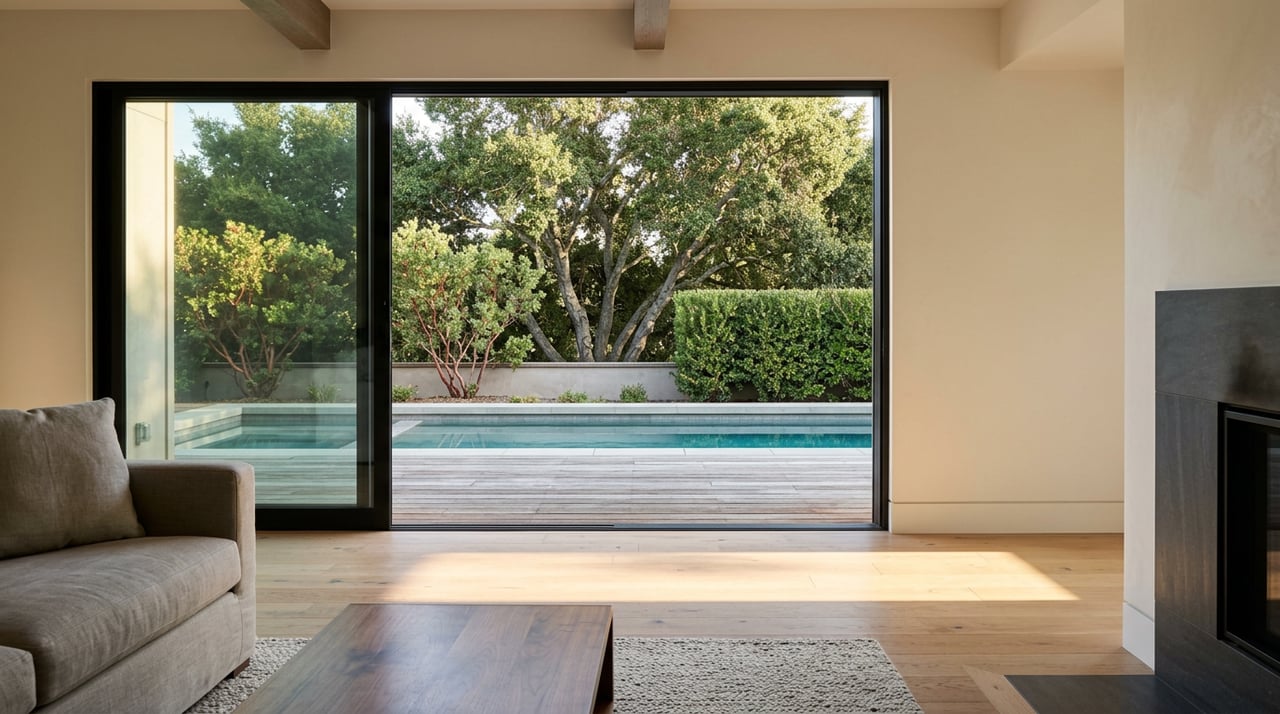
Postwar homes introduced another architectural language. Second Bay Tradition is described as a Bay Area modernism centered on open plans, large windows, indoor-outdoor connection, and local materials such as redwood, while later Third Bay examples became more geometric and abstract.
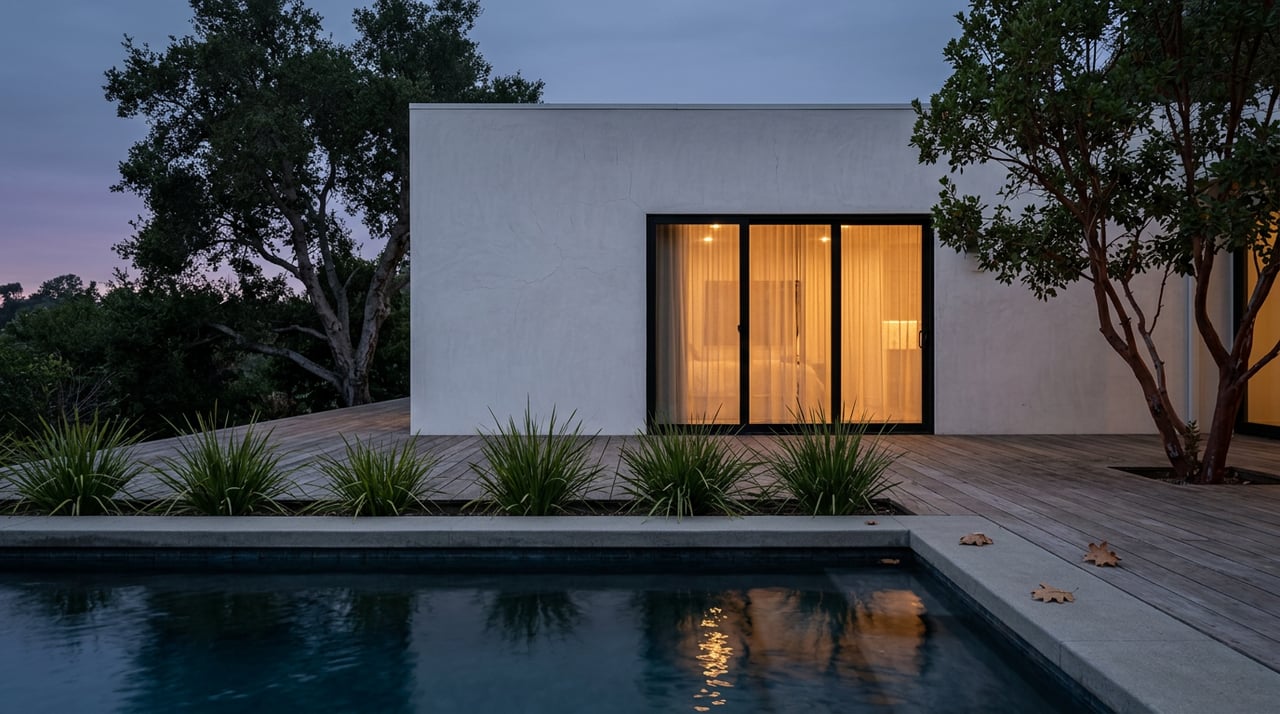
For a trailside buyer, this matters because architecture and lot type often reinforce each other. Bay Area modern homes, in particular, can pair naturally with wooded sites, sloped land, light, and views.
Parks and trail access points
Mount Tamalpais State Park is the region’s major outdoor anchor. The state park describes a landscape of deep canyons, sweeping hillsides, redwood forests, oak woodlands, grasslands, and chaparral, all of which help explain why Mill Valley feels so tied to outdoor movement.
From Mill Valley, the Dipsea Trail begins in town and runs over Mount Tam to Stinson Beach. The Old Railroad Grade Trail links the north side of the Mountain Home Inn to Blithedale Ridge in Mill Valley.
Other notable access points include the Miwok Trailhead on Shoreline Highway and local parks such as Bayfront Park, Blithedale Park, Cascade Park, Old Mill Park, Sycamore Park, and Downtown Plaza. Depending on the neighborhood, your version of outdoor access may be a quick trail outing, a park stop, or a longer route into regional open space.
Practical factors buyers should compare
When you are narrowing neighborhoods, it helps to compare more than style or price point. In Mill Valley, small geographic differences can change how a home lives.
Here are a few smart questions to ask as you compare options:
- How easy is the route from the home to trails, parks, or downtown on foot?
- Are nearby paths level and maintained, or steep and more rugged?
- Does the setting prioritize privacy, views, convenience, or a mix?
- How much of your daily routine will depend on stairs, narrow roads, or hillside access?
- Does the lot sit in a canyon, on a ridge, or on flatter bay-adjacent land?
These questions can help you move past broad neighborhood labels. In Mill Valley, the difference between a good fit and a great fit often comes down to how the site supports your everyday habits.
Shoreline versus hillside considerations
Not all trailside settings come with the same environmental context. On the shoreline side, Bothin Marsh and the Mill Valley-Sausalito Pathway are already being affected by flooding and sea level rise along Richardson Bay.
That makes bayfront flats a different decision from canyon or hillside properties. A shoreline setting may offer flatter terrain and access to bayfront routes, while a hillside setting is more likely to bring questions about slope, drainage, tree cover, privacy, and access.
Neither is automatically better. The key is understanding that Mill Valley’s outdoor-oriented neighborhoods are not interchangeable, even when they share the same broad lifestyle appeal.
How to choose the right fit
If you want everyday convenience and a village atmosphere, downtown-adjacent areas and Sycamore/Tamalpais Park often make the most sense. If you are looking for wooded privacy and a stronger retreat feel, Cascade Canyon, Blithedale Canyon, and higher hillside pockets such as Miller/Molino or Warner Canyon/Kite Hill may be the better match.
If trail integration is your top priority, Homestead Valley also belongs in the conversation. And if you are comparing flatter neighborhoods near the bay, it is worth weighing ease of access against shoreline conditions and the different feel of those areas.
The right Mill Valley home is rarely just about the house itself. It is about how the neighborhood, terrain, and access patterns support the way you want to live.
If you want a tailored, neighborhood-level view of Mill Valley and nearby Marin options, Christine Christiansen offers a discreet, data-informed approach to helping you evaluate fit, access, and long-term value.
FAQs
What does trailside living in Mill Valley usually mean?
- It usually means living with meaningful access to parks, steps, lanes, paths, and larger open-space systems such as Mount Tamalpais State Park, Muir Woods, and Golden Gate National Recreation Area.
Which Mill Valley neighborhoods feel most walkable for daily errands?
- Downtown, Old Mill, and nearby central streets are generally the most walkable for day-to-day convenience because of their proximity to parks, commercial activity, and the Downtown Plaza.
Which Mill Valley areas feel more private and wooded?
- Cascade Canyon and Blithedale Canyon are known for a more enclosed, wooded setting with narrow roads, dense vegetation, and a stronger sense of retreat.
Which Mill Valley neighborhoods are relatively flat?
- Sycamore/Tamalpais Park is relatively level compared with many canyon areas, and other flatter neighborhood patterns can be found in places such as Scott Valley, Alto, Enchanted Knolls, Bayfront, and Shelter Ridge.
What should buyers know about Mill Valley steps and paths?
- The city documents more than 175 heritage steps, lanes, and paths, but many are steep, rocky, or not maintained by the City, so it is important to compare map walkability with real-world ease of use.
How is shoreline living different from hillside living in Mill Valley?
- Shoreline areas near Richardson Bay may involve flooding and sea level rise considerations, while hillside and canyon homes are more likely to raise questions about slope, drainage, trees, access, and privacy.